
This year, we donated £10,000 to the Science and Industry Museum (SIM) in Manchester.
Our donation supports Space Explorers, a coding and space exploration workshop for young students. The programme offers a practical way for children to discover how computing can be used in space research and exploration.
About the Science and Industry Museum
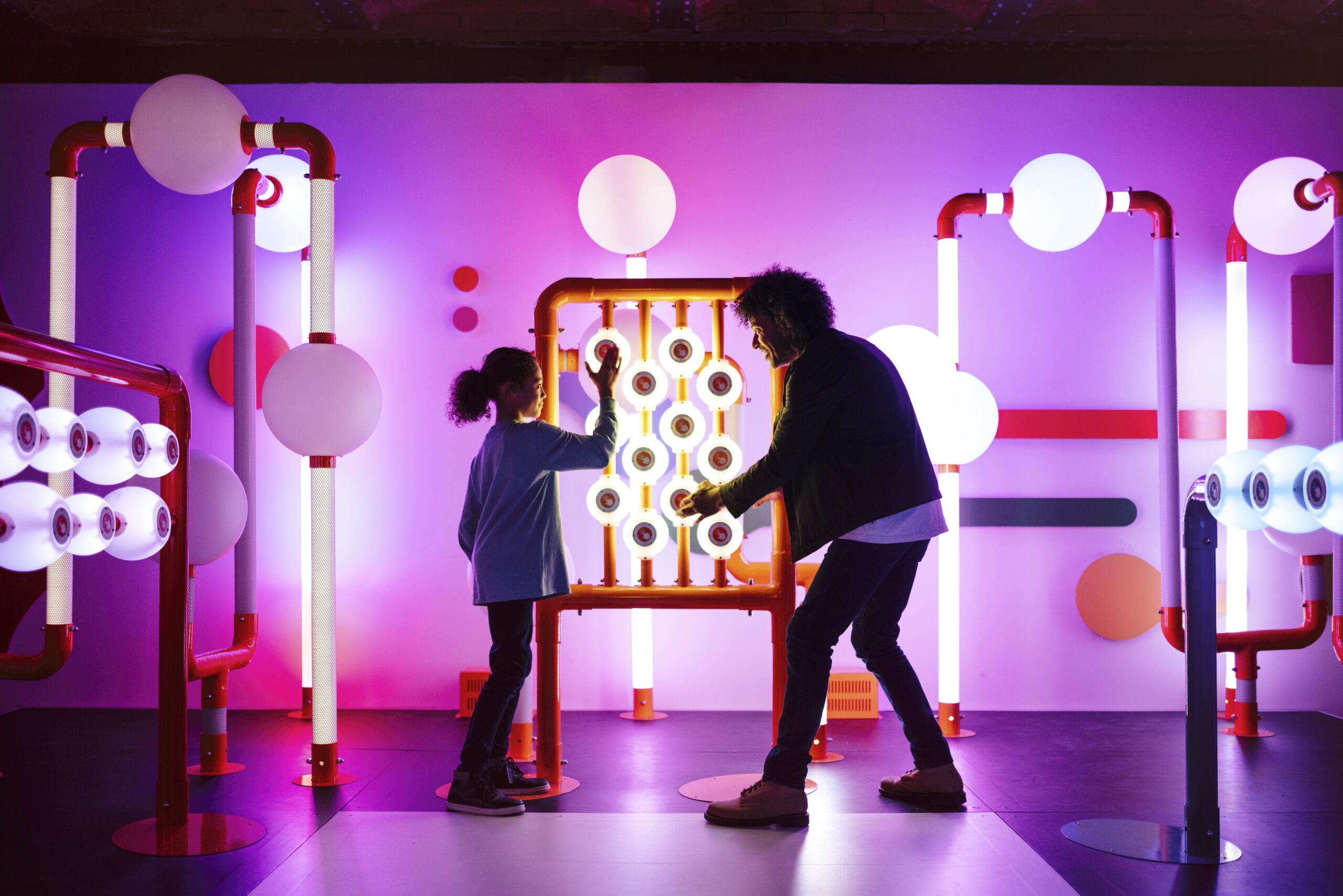
The Science and Industry Museum is part of the Science Museum Group, one of the ReAgent Foundation’s 2026 charitable partners. They’ve championed innovation for over a century and are one of the world’s leading museum groups for science, technology, engineering, and mathematics (STEM) education.
SIM is the most-visited museum for young students in the North West. 38,162 people visited the museum as part of education groups in 2024/2025, and 70% of all visitors are families with children.
For us, supporting SIM means giving young students a chance to engage with STEM subjects in a hands-on setting.
How Our Donation Brings STEM Learning to Students

Space Explorers launched in March 2026 and allows Key Stage 2 pupils to learn coding through an interactive space mission.
During the 45-minute workshop, children take on the role of new recruits for a lunar research company and use coding to help a Moon rover find rock samples. Along with learning computing, students develop teamwork, problem-solving and experimenting skills.
Sessions take place in the museum’s Revolution Manchester Gallery, in front of a replica of Baby. Developed in Manchester, Baby was one of the first computers capable of storing and running a programme from its own memory.
Students can also meet Divya Ravy, a lunar researcher based in Manchester. This is a chance for children to engage with a science professional and recognise the possibilities of a career in STEM.
Getting Involved: ReAgent at GET CURIOUS
Our support of the Science and Industry Museum doesn’t stop at funding.
ReAgent team members will bring their knowledge to GET CURIOUS, the museum’s live event series, where STEM professionals engage with the public and inspire the next generation of innovators and inventors.
We’ll run interactive, space-themed experiments for children aged 7-11, giving our team the chance to share their knowledge with young visitors.
We’re proud to support initiatives like these that bring our community together, encourage the next generation to explore STEM, and create opportunities for young people to see where their interests and ideas could take them.
